
Pore Clogging Ingredient Checker – Find Out What’s Causing Your Breakouts

If you have been struggling with acne, blackheads or skin that never seems to clear up no matter what you try, the answer might be hiding right in your skincare routine.
Many products even ones labeled “natural” “gentle” or “dermatologist-tested” contain ingredients that are scientifically proven to clog pores and trigger breakouts.
These are called comedogenic ingredients. And the only way to know if your product has them is to check the ingredient list.
That is exactly why we built the Pore Clogging Ingredient Checker right here on BiteDive a free, instant tool that scans any ingredient list and rates every single ingredient on the proven 0–5 comedogenic scale. No sign-up, no download, completely free.
What Does “Comedogenic” Actually Mean?
The word comedogenic comes from “comedone” the medical term for a blocked pore. An open comedone is what we call a blackhead. A closed one becomes a whitehead. When enough of them get inflamed, you have acne.
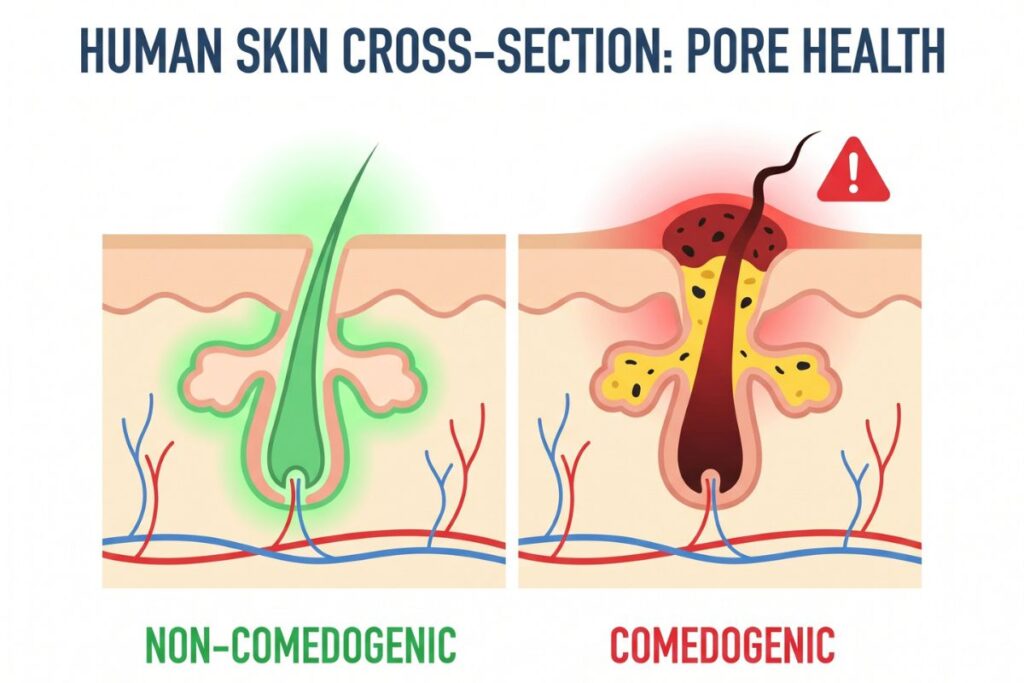
A comedogenic ingredient is any substance that when applied to skin increases the likelihood of pores becoming blocked. This happens because the ingredient is too heavy or too thick to allow the follicle to breathe, trapping sebum, dead skin cells, and bacteria inside.
The concept was first studied scientifically by Dr. James Fulton the same dermatologist who co-invented Retin-A in a landmark 1989 paper published in the Journal of the Society of Cosmetic Chemists.
His team tested hundreds of raw cosmetic ingredients by applying them to rabbit ears and measuring comedone formation. The result was the 0–5 comedogenic rating scale that the skincare industry still uses today.
According to the American Academy of Dermatology, choosing non-comedogenic products is one of the most important steps for anyone with acne-prone skin.
The Comedogenic Rating Scale — 0 to 5 Explained
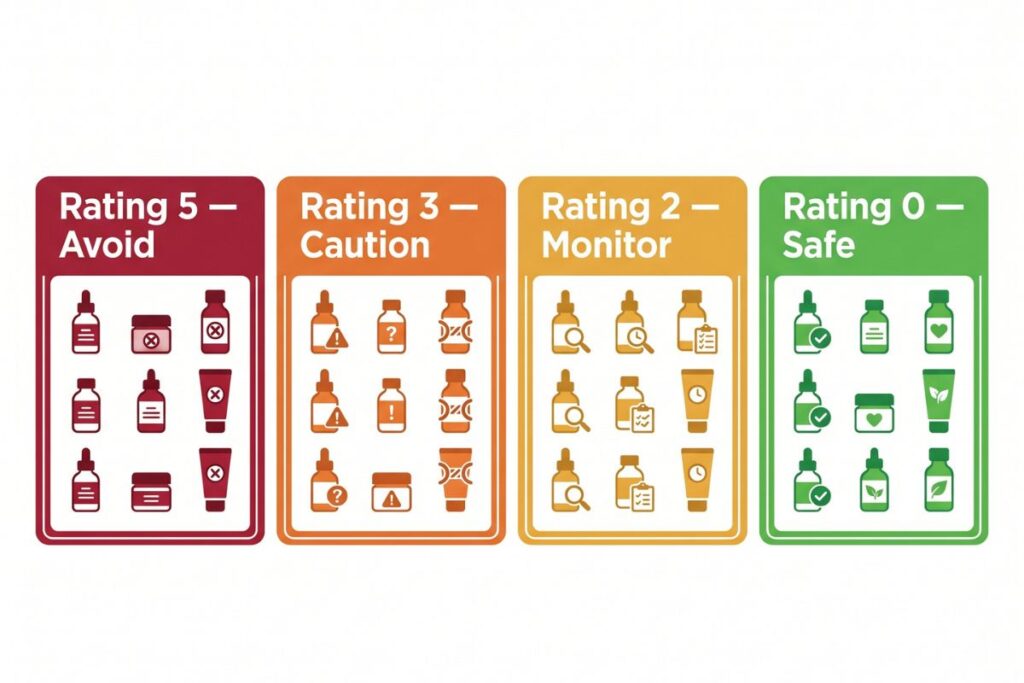
Every ingredient in our checker database is rated on this scale:
Rating 0: Non-Comedogenic Will not clog pores under any normal circumstances. Completely safe for all skin types including the most acne-prone.
Rating 1: Minimal Risk Very low probability of clogging pores. Safe for the vast majority of people. Only those with extremely reactive skin may occasionally see issues.
Rating 2: Low-Moderate Risk Mildly comedogenic. Fine for normal skin, but people with oily or breakout-prone skin should watch how their skin responds.
Rating 3: Moderate Risk Has a real chance of clogging pores, especially in people with acne-prone skin. Worth avoiding if you break out easily, or at minimum check where it appears in the ingredient list.
Rating 4: High Risk Highly comedogenic. Strongly avoid if you are prone to blackheads or acne. Even in small amounts this can be problematic.
Rating 5: Extremely High Risk Maximum pore-clogging potential. These ingredients should be completely avoided by anyone with acne-prone or sensitive skin.
Pro Tip: Ingredient position matters enormously. A rating-4 ingredient listed last in a long formula (meaning very low concentration) is far less dangerous than the same ingredient listed second or third. Our checker shows exactly where each ingredient was detected so you can judge accordingly.
How to Use the BiteDive Pore Clogging Ingredient Checker
Using the tool takes under 60 seconds:

- Find your product’s ingredient list — it is on the packaging or on the brand’s website under “full ingredients”
- Select all the ingredients and copy them
- Open our free Ingredient Checker tool
- Paste the full list into the text box
- Click Check Ingredients
- Read your results — every matched ingredient is shown with its rating, category, and explanation
Results are color-coded for instant reading: red for high-risk (rating 3–5), amber for caution (rating 1–2) and green for safe (rating 0). Any ingredient not found in our 250+ database is shown separately so you know exactly what was and was not checked.
Important: You can check any product — moisturizers, foundations, sunscreens, serums, cleansers, hair products, even body lotions. If it touches your face, check it.
Why “Natural” Does Not Mean Non-Comedogenic
This is the most common misconception in skincare. Many people assume that if an ingredient comes from nature, it must be safe for their skin. Unfortunately this is completely wrong.
Some of the most comedogenic ingredients in existence are 100% natural:
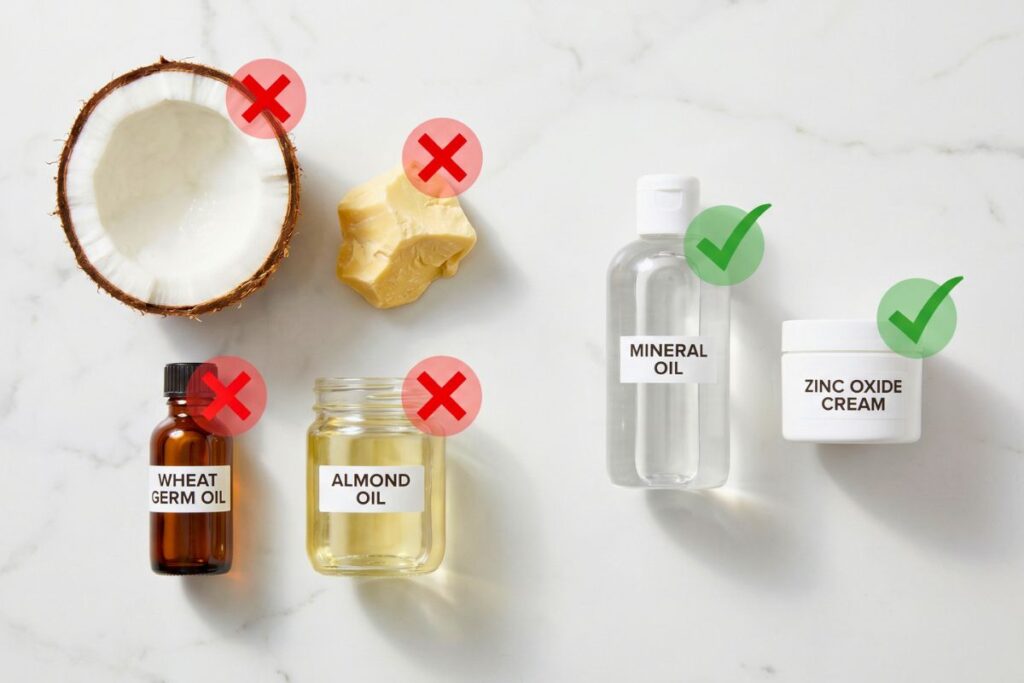
- Coconut Oil: rating 4. One of the most popular natural ingredients and one of the worst for acne-prone skin.
- Wheat Germ Oil: rating 5. Maximum comedogenic score despite being a plant-based oil.
- Algae Extract: rating 5. Widely used in “natural” and “marine” skincare lines.
- Cocoa Butter: rating 4. A favorite in body care that can severely clog facial pores.
- Beeswax: rating 2. Common in lip products and natural balms.
On the flip side, some synthetic ingredients are completely non-comedogenic. Mineral oil, often feared as a pore-clogger, has a comedogenic rating of 0 and is used in many dermatological formulations for sensitive skin. Dimethicone (a silicone) is also rated 0–1 and forms a breathable barrier without entering pores.
Always check the ingredient list — not the marketing claims.
Full Comedogenic Ingredients List — All 250+ Rated Ingredients
Below is the complete database used in our Pore Clogging Ingredient Checker tool. Every ingredient is listed with its comedogenic rating and common alternate names so you can find it no matter how it appears on a product label.
🔴 Rating 5 — Extremely High Risk (Avoid Completely)
| Ingredient | Also Known As |
|---|---|
| Algae Extract | algae, rhodophyta |
| Carrageenans | carrageenan, irish moss extract |
| Red Algae | rhodophyta |
| Sodium Chloride | salt, NaCl |
| Potassium Chloride | KCl |
| Wheat Germ Oil | triticum vulgare germ oil |
| Isopropyl Isostearate | — |
| Isopropyl Myristate | IPM |
| Isopropyl Linolate | — |
| Hexadecyl Alcohol | — |
| Isocetyl Stearate | — |
| Octyl Stearate | 2-ethylhexyl stearate |
| Oleth-3 | — |
| Laureth-4 | — |
| Sodium Lauryl Sulfate | SLS, sodium dodecyl sulfate |
| Myristyl Myristate | — |
| D&C Red #17 | CI 26100 |
| D&C Red #21 | CI 45380 |
| D&C Red #3 | CI 45430 |
🔴 Rating 4 — High Risk (Strongly Avoid)
| Ingredient | Also Known As |
|---|---|
| Myristyl Lactate | — |
| Acetylated Lanolin | — |
| Acetylated Lanolin Alcohol | — |
| PEG-16 Lanolin | Solulan 16 |
| Coconut Oil | cocos nucifera, coconut butter, coco oil |
| Cocoa Butter | theobroma cacao seed butter, cacao butter |
| Isopropyl Palmitate | — |
| Stearyl Heptanoate | — |
| Isostearyl Isostearate | — |
| Glyceryl-3-Diisostearate | — |
| Oleyl Alcohol | — |
| Ethylhexyl Palmitate | octyl palmitate |
| Lauric Acid | dodecanoic acid |
| Algin | sodium alginate |
| Xylene | xylol |
| Glyceryl Stearate SE | self-emulsifying glyceryl stearate |
| D&C Red #9 | — |
| FD&C Red #4 | — |
🟠 Rating 3 — Moderate Risk (Caution for Acne-Prone Skin)
| Ingredient | Also Known As |
|---|---|
| Mink Oil | — |
| Corn Oil | zea mays oil, maize oil |
| Cotton Seed Oil | gossypium herbaceum, cottonseed oil |
| Soybean Oil | glycine soja oil, glycine max |
| Shark Liver Oil | — |
| Marula Oil | sclerocarya birrea seed oil |
| Palm Oil | elaeis guineensis oil |
| Flaxseed Oil | linseed oil, linum usitatissimum seed oil |
| Myristic Acid | tetradecanoic acid |
| Butyl Stearate | — |
| Dioctyl Succinate | bis-2-ethylhexyl succinate |
| Decyl Oleate | — |
| Isostearyl Neopentanoate | — |
| PPG-2 Myristyl Propionate | — |
| Laureth-23 | — |
| Sorbitan Oleate | Span 80 |
| Stearic Acid TEA | TEA-stearate, triethanolamine stearate |
| Sodium Laureth Sulfate | SLES |
| Cocamide DEA | lauramide DEA |
| Colloidal Sulfur | colloidal sulphur |
| Corn Starch | zea mays starch, cornstarch |
| Sulfated Jojoba Oil | — |
| Sulfated Castor Oil | turkey red oil |
| Cocamide MEA | — |
| Oleth-3 Phosphate | — |
🟡 Rating 2 — Low-Moderate Risk (Monitor Skin)
| Ingredient | Also Known As |
|---|---|
| Olive Oil | olea europaea fruit oil |
| Avocado Oil | persea gratissima oil |
| Sesame Oil | sesamum indicum oil |
| Almond Oil | prunus amygdalus dulcis oil, sweet almond oil |
| Apricot Kernel Oil | prunus armeniaca kernel oil |
| Hazelnut Oil | corylus avellana oil |
| Grape Seed Oil | vitis vinifera seed oil |
| Evening Primrose Oil | oenothera biennis oil |
| Peanut Oil | arachis hypogaea oil, groundnut oil |
| Sandalwood Seed Oil | — |
| Jojoba Oil | simmondsia chinensis seed oil |
| Walnut Oil | juglans regia oil |
| Macadamia Oil | macadamia integrifolia seed oil |
| Borage Oil | borago officinalis seed oil |
| Rice Bran Oil | oryza sativa bran oil |
| Mango Butter | mangifera indica seed butter |
| Murumuru Butter | astrocaryum murumuru butter |
| Palmitic Acid | hexadecanoic acid |
| Stearic Acid | octadecanoic acid |
| Oleic Acid | — |
| Ascorbyl Palmitate | — |
| Vitamin A Palmitate | retinyl palmitate |
| Tocopherol | vitamin E, mixed tocopherols |
| Cetearyl Alcohol | cetostearyl alcohol |
| Cetyl Alcohol | hexadecanol |
| Stearyl Alcohol | octadecanol |
| Beeswax | cera alba, apis mellifera wax |
| Emulsifying Wax NF | — |
| Lanolin Alcohol | wool alcohol |
| Ceteareth-20 | — |
| Oleth-10 | — |
| Triethanolamine | TEA, trolamine |
| Chamomile | anthemis nobilis, matricaria chamomilla |
| Camphor | cinnamomum camphora |
| Lavender Oil | lavandula angustifolia oil |
| Frankincense Oil | boswellia carterii oil |
| Carrot Seed Oil | daucus carota sativa seed oil |
| BHA | butylated hydroxyanisole |
| Carbomer 940 | carbopol 940 |
| Hydroxypropyl Cellulose | hyprolose |
| Cocoa Powder | theobroma cacao powder |
| Wheat Germ Glycerides | — |
| Sunflower Wax | helianthus annuus wax |
🟢 Rating 1 — Minimal Risk (Generally Safe)
| Ingredient | Also Known As |
|---|---|
| Squalane | — |
| Castor Oil | ricinus communis seed oil |
| Rosehip Oil | rosa canina fruit oil, rosehip seed oil |
| Sea Buckthorn Oil | hippophae rhamnoides oil |
| Emu Oil | dromaius novaehollandiae oil |
| Candelilla Wax | euphorbia cerifera wax |
| Carnauba Wax | copernicia cerifera wax |
| Lanolin Wax | — |
| Anhydrous Lanolin | lanolin, adeps lanae, wool grease |
| Glyceryl Stearate NSE | glyceryl stearate, glyceryl monostearate |
| Caprylic/Capric Triglyceride | MCT oil, fractionated coconut oil |
| Butylene Glycol | 1,3-butanediol |
| Dimethicone | PDMS, polydimethylsiloxane |
| Phenyl Trimethicone | — |
| Talc | talcum |
| Magnesium Stearate | — |
| Lithium Stearate | — |
| Beta Carotene | carotene |
| Calendula | calendula officinalis, pot marigold |
| Laminaria Extract | kelp extract, laminaria digitata extract |
| Peppermint Oil | mentha piperita oil |
| Tea Tree Oil | melaleuca alternifolia leaf oil |
| Lemon Oil | citrus limon peel oil |
| Eucalyptus Oil | eucalyptus globulus leaf oil |
| Ylang Ylang Oil | cananga odorata flower oil |
| Marjoram Oil | origanum majorana flower oil |
| Sodium Stearate | — |
| Sterol Esters | phytosterol esters |
✅ Rating 0 — Non-Comedogenic (Completely Safe)
Base & Water
| Ingredient | Also Known As |
|---|---|
| Water | aqua, eau, distilled water, deionized water |
Safe Oils
| Ingredient | Also Known As |
|---|---|
| Hemp Seed Oil | cannabis sativa seed oil |
| Mineral Oil | paraffinum liquidum, white mineral oil |
| Petrolatum | petroleum jelly, vaseline, white petrolatum |
| Safflower Oil | carthamus tinctorius oil |
| Sunflower Oil | helianthus annuus seed oil |
| Argan Oil | argania spinosa kernel oil |
| Squalene | — |
| Meadowfoam Seed Oil | limnanthes alba seed oil |
Safe Butters
| Ingredient | Also Known As |
|---|---|
| Shea Butter | butyrospermum parkii butter, vitellaria paradoxa |
| Kokum Butter | garcinia indica butter |
| Mafura Butter | trichilia emetica seed butter |
Fatty Acids (Safe)
| Ingredient | Also Known As |
|---|---|
| Linoleic Acid | vitamin F |
| Behenic Acid | docosanoic acid |
| Capric Acid | decanoic acid |
| Caprylic Acid | octanoic acid |
Vitamins
| Ingredient | Also Known As |
|---|---|
| Tocopheryl Acetate | vitamin E acetate, alpha-tocopheryl acetate |
| Ascorbic Acid | vitamin C, l-ascorbic acid |
| Ascorbyl Glucoside | AA2G |
| Sodium Ascorbyl Phosphate | SAP |
| Magnesium Ascorbyl Phosphate | MAP |
| Panthenol | provitamin B5, dexpanthenol |
| Pantothenic Acid | calcium pantothenate |
| Biotin | vitamin H, vitamin B7 |
Actives
| Ingredient | Also Known As |
|---|---|
| Retinol | vitamin A alcohol |
| Retinaldehyde | retinal |
| Niacinamide | nicotinamide, vitamin B3 |
| Salicylic Acid | BHA, 2-hydroxybenzoic acid |
| Glycolic Acid | hydroxyacetic acid |
| Lactic Acid | l-lactic acid |
| Mandelic Acid | — |
| Tartaric Acid | — |
| Citric Acid | — |
| Malic Acid | — |
| Azelaic Acid | nonanedioic acid |
| Benzoyl Peroxide | — |
| Hyaluronic Acid | sodium hyaluronate, HA, hyaluronan |
| Bakuchiol | — |
| Tranexamic Acid | — |
| Alpha Arbutin | arbutin, beta-arbutin |
| Kojic Acid | — |
| Phytic Acid | inositol hexaphosphate |
| Galactomyces Ferment Filtrate | galactomyces |
| Snail Secretion Filtrate | snail mucin, helix aspersa |
| EGF (Epidermal Growth Factor) | sh-oligopeptide-1 |
| Zinc PCA | — |
| Adenosine | — |
| Polyglutamic Acid | PGA, sodium polyglutamate |
| Beta Glucan | oat beta glucan, beta-1,3-glucan |
Antioxidants
| Ingredient | Also Known As |
|---|---|
| Resveratrol | trans-resveratrol |
| Ferulic Acid | — |
| Coenzyme Q10 | ubiquinone, CoQ10 |
| Idebenone | — |
| Glutathione | reduced glutathione |
| Superoxide Dismutase | SOD |
Peptides
| Ingredient | Also Known As |
|---|---|
| Copper Peptides | GHK-Cu, copper tripeptide-1 |
| Palmitoyl Peptides | palmitoyl tripeptide, palmitoyl pentapeptide |
| Acetyl Hexapeptide-3 | argireline |
| Matrixyl | palmitoyl pentapeptide-4 |
| Leuphasyl | acetyl glutamyl heptapeptide-3 |
Humectants
| Ingredient | Also Known As |
|---|---|
| Glycerin | glycerol, glycerine |
| Propylene Glycol | 1,2-propanediol |
| Sodium PCA | sodium pyroglutamate |
| Urea | carbamide |
| Allantoin | — |
| Sorbitol | d-sorbitol |
| Betaine | trimethylglycine |
| Sodium Lactate | — |
| Trehalose | alpha-d-trehalose |
| Inositol | myo-inositol |
| Erythritol | — |
| Xylitol | — |
| Butylene Glycol | 1,3-butanediol |
Silicones
| Ingredient | Also Known As |
|---|---|
| Cyclomethicone | cyclopentasiloxane, D5 |
| Cyclopentasiloxane | D4, cyclotetrasiloxane |
| Cyclohexasiloxane | D6 |
| Amodimethicone | — |
| PEG-12 Dimethicone | — |
Minerals & Physical Sunscreens
| Ingredient | Also Known As |
|---|---|
| Zinc Oxide | CI 77947 |
| Titanium Dioxide | CI 77891 |
| Kaolin | kaolin clay, china clay |
| Magnesium Aluminum Silicate | veegum |
| Zinc Stearate | — |
| Bentonite | bentonite clay |
| Fuller’s Earth | multani mitti |
| Mica | CI 77019 |
| Iron Oxides | CI 77491, CI 77492, CI 77499 |
Chemical Sunscreens
| Ingredient | Also Known As |
|---|---|
| Oxybenzone | benzophenone-3 |
| Octyl Methoxycinnamate | ethylhexyl methoxycinnamate, octinoxate |
| Octyl Salicylate | ethylhexyl salicylate, octisalate |
| Avobenzone | butyl methoxydibenzoylmethane |
| Octocrylene | — |
| Homosalate | — |
| Tinosorb S | bis-ethylhexyloxyphenol methoxyphenyl triazine |
| Tinosorb M | methylene bis-benzotriazolyl tetramethylbutylphenol |
| Mexoryl SX | terephthalylidene dicamphor sulfonic acid |
Waxes (Safe)
| Ingredient | Also Known As |
|---|---|
| Ceresin Wax | ceresin |
Emulsifiers (Safe)
| Ingredient | Also Known As |
|---|---|
| Polysorbate 20 | tween 20 |
| Polysorbate 40 | tween 40 |
| Polysorbate 60 | tween 60 |
| Polysorbate 80 | tween 80 |
| Sorbitan Stearate | span 60 |
| Ceteareth-12 | — |
| PEG-75 Lanolin | — |
Thickeners & Polymers
| Ingredient | Also Known As |
|---|---|
| Hydroxyethylcellulose | natrosol |
| Xanthan Gum | — |
| Carbomer | carbomer 980, carbomer 934 |
| Acrylates Copolymer | acrylates/C10-30 alkyl acrylate crosspolymer |
| Cellulose | microcrystalline cellulose |
| Guar Gum | cyamopsis tetragonoloba gum |
| Polyethylene Glycol | PEG-400, PEG-100, PEG-8 |
| Nylon-12 | polyamide-12 |
| Polyisobutene | — |
Preservatives
| Ingredient | Also Known As |
|---|---|
| Phenoxyethanol | 2-phenoxyethanol |
| Methylparaben | methyl paraben |
| Ethylparaben | ethyl paraben |
| Propylparaben | propyl paraben |
| Butylparaben | butyl paraben |
| Ethylhexylglycerin | 2-ethylhexylglycerin |
| Sodium Benzoate | — |
| Potassium Sorbate | — |
| DMDM Hydantoin | — |
| Chlorphenesin | — |
| Caprylyl Glycol | — |
| 1,2-Hexanediol | hexanediol |
| Sorbic Acid | — |
Ceramides & Skin Barrier
| Ingredient | Also Known As |
|---|---|
| Ceramide NP | ceramide 3, ceramide III |
| Ceramide AP | ceramide 6-II |
| Ceramide EOP | ceramide 1 |
| Ceramide NS | ceramide 2 |
| Ceramide AS | — |
| Phytosphingosine | — |
| Sphingosine | — |
| Cholesterol | — |
Chelating Agents
| Ingredient | Also Known As |
|---|---|
| Tetrasodium EDTA | EDTA |
| Disodium EDTA | — |
| Sodium Gluconate | — |
Proteins
| Ingredient | Also Known As |
|---|---|
| Hydrolyzed Collagen | soluble collagen |
| Hydrolyzed Silk | silk amino acids |
| Hydrolyzed Keratin | — |
| Hydrolyzed Elastin | — |
| Hydrolyzed Oat Protein | avena sativa protein |
Botanicals (Safe)
| Ingredient | Also Known As |
|---|---|
| Aloe Vera | aloe barbadensis, aloe barbadensis leaf juice |
| Chamomile Extract | bisabolol, alpha-bisabolol |
| Centella Asiatica | cica, gotu kola, madecassoside, asiaticoside |
| Green Tea Extract | camellia sinensis extract, EGCG |
| Licorice Root Extract | glycyrrhiza glabra, glabridin |
| Witch Hazel | hamamelis virginiana |
| Rosemary Extract | rosmarinus officinalis extract |
| Caffeine | — |
| Colloidal Oatmeal | avena sativa kernel flour |
| Mugwort Extract | artemisia vulgaris extract |
| Mushroom Extract | tremella fuciformis, reishi, ganoderma lucidum |
| Madecassoside | asiatic acid |
| Portulaca Oleracea Extract | purslane extract |
| Saccharomyces Ferment | yeast extract |
| Bifida Ferment Lysate | lactobacillus ferment |
| Turmeric Extract | curcuma longa, curcumin |
| Pomegranate Extract | punica granatum, ellagic acid |
| Sea Kelp | ascophyllum nodosum, fucus vesiculosus |
Alcohols (Safe)
| Ingredient | Also Known As |
|---|---|
| Isopropyl Alcohol | IPA, isopropanol, propan-2-ol |
| Benzyl Alcohol | — |
5 Myths About Pore-Clogging Ingredients — Debunked
Myth 1: “Natural” oils are always safe for acne skin
False. As shown above, coconut oil (rating 4), wheat germ oil (rating 5) and avocado oil (rating 2) are all natural and all comedogenic to varying degrees. Never trust marketing claims always check the ingredient list using our tool.
Myth 2: Mineral oil clogs pores
False. This is one of the most persistent myths in skincare. Mineral oil has a comedogenic rating of 0. It was debunked in a major 2006 study published in the Journal of the American Academy of Dermatology by Draelos and DiNardo, which found no link between mineral oil in finished products and comedone formation.
Myth 3: “Non-comedogenic” on the label means it is safe
Misleading. The term “non-comedogenic” is not regulated by the FDA. Any brand can print it on any product without scientific testing. The only way to truly verify is to check the actual ingredient list.
Myth 4: Silicones suffocate and clog pores
False. Silicones like dimethicone and cyclopentasiloxane are rated 0–1. They form a breathable, flexible film on the skin surface but their molecular size prevents them from entering the follicle opening. Many dermatologists specifically recommend silicone-based products for sensitive and acne-prone skin.
Myth 5: One comedogenic ingredient will always break you out
Not necessarily. Individual skin sensitivity varies enormously. Some people can use rating-4 ingredients with no reaction at all. Others break out from rating-2 ingredients. Concentration in the formula and your personal skin type both matter. Use the ratings as a guide not a guaranteed prediction.
What Products Should You Always Check?
Use the BiteDive Ingredient Checker before using any of these:
- Moisturizers and face creams: the most common source of hidden comedogenic ingredients
- Sunscreens: many contain isopropyl myristate or isopropyl palmitate as carriers
- Foundations and BB creams: frequent culprits of “makeup acne”
- Primers: silicone-based primers are usually fine, but check other ingredients
- Facial oils and serums: even “skin-balancing” oils can be high on the scale
- Hair products: shampoos, conditioners and styling products that touch the hairline and forehead can cause pomade acne
- Lip balms: can migrate onto the skin around the mouth and cause breakouts
How to Build a Completely Pore-Safe Skincare Routine
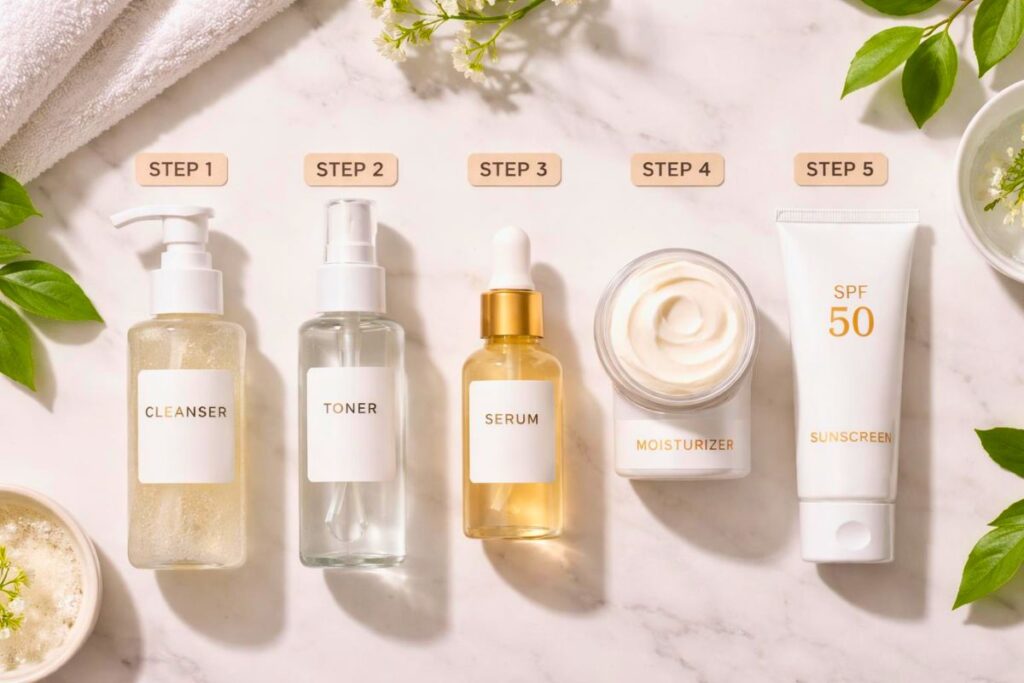
Step 1: Cleanser
Choose a gentle gel or foam cleanser that is free of coconut oil, cocoa butter and high-rating fatty acids. Safe surfactants include glucosides, betaines and sulfate-free formulas. Avoid anything with sodium lauryl sulfate (rating 5) if your skin is reactive.
Step 2: Toner or Essence
Look for toners built around niacinamide, witch hazel or centella asiatica — all rated 0. Avoid toners with high concentrations of algae extract (rating 5) or salty formulas.
Step 3: Serum
Serums are usually your safest step. Hyaluronic acid, niacinamide, vitamin C (ascorbic acid), retinol, azelaic acid and peptide serums are all non-comedogenic. If you use a facial oil serum, choose argan oil (0), rosehip oil (1) or hemp seed oil (0) over coconut or avocado oil.
Step 4: Moisturizer
This is the step where most people unknowingly apply comedogenic ingredients. Many popular moisturizers contain coconut oil, isopropyl myristate or stearyl heptanoate. Look for water-based or gel-cream formulas built on glycerin, hyaluronic acid, ceramides and niacinamide.
Step 5: Sunscreen
Zinc oxide and titanium dioxide (both rating 0) are your safest options. Many chemical sunscreens are also 0-rated.
The problem ingredients to watch in sunscreens are the carrier agents isopropyl myristate and isopropyl palmitate are commonly used to give sunscreens a smooth, non-greasy feel and both are highly comedogenic.
Frequently Asked Questions
Q: How accurate are comedogenic ratings?
The ratings come from scientific studies conducted on isolated, undiluted ingredients. In a finished product, concentration and formulation chemistry affect real-world behavior.
A 2006 study in the Journal of the American Academy of Dermatology found that many finished products containing comedogenic ingredients tested as non-comedogenic overall. Use the ratings as a useful risk indicator, not an absolute law.
Q: Does ingredient order matter?
Yes, significantly. Cosmetic ingredients are listed in descending order of concentration. An ingredient in position 2 or 3 makes up a significant portion of the product.
The same ingredient in position 25 may be at a concentration below 1% and is far less likely to cause issues.
Q: Can I use this checker for hair products?
Absolutely. Hair products especially oils, conditioners and styling creams frequently cause breakouts along the hairline, forehead and temples.
This is known as acne cosmetica or pomade acne. Check your hair products as carefully as your skincare.
Q: How often is the database updated?
We review and expand the database regularly. It currently includes 250+ ingredients across all major cosmetic categories.
If you paste an ingredient that shows up in the “not in database” section, it simply means we have not yet added it — not that it is safe or unsafe.
Q: My product has a comedogenic ingredient but I am not breaking out. Should I stop using it?
No. If your skin is tolerating a product well, there is no reason to switch. Comedogenic ratings predict risk, not certainty.
Some people have skin that handles high-rated ingredients without any reaction. Only change products if you are experiencing actual breakouts or congestion.